
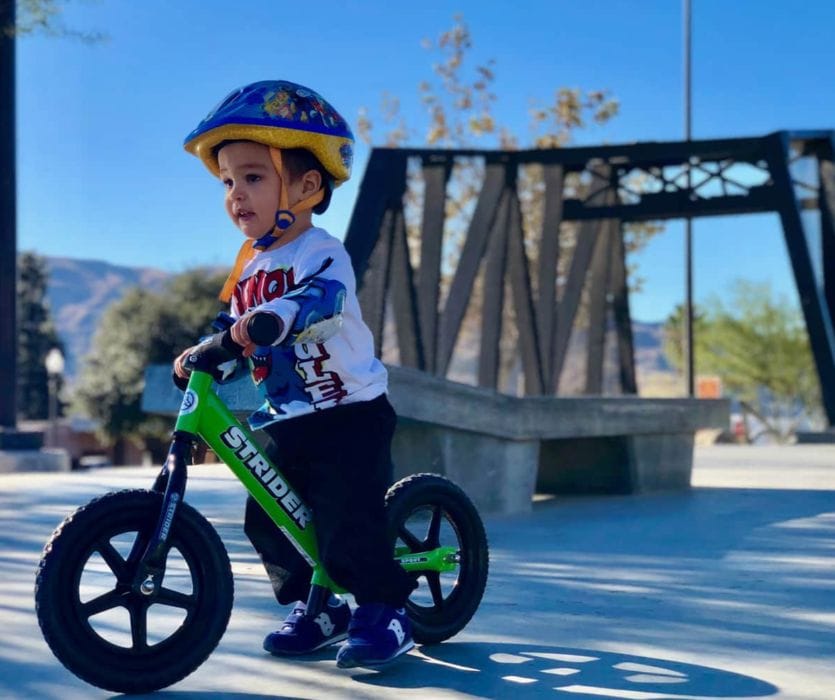
When my oldest was just under two, I watched him push off on his Strider balance bike for the first time, lift both feet, and glide down our driveway with the biggest grin on his face. No training wheels, no running behind him holding the seat, just pure joy as he figured out balance on his own terms.
Four years later, both my boys transitioned to pedal bikes in a single afternoon without my help, and when we sold that Strider, it looked good as new and I got half my money back.
Anyone who knows me knows that I loved the balance bike we had for our kids. I kinda stumbled upon it, so now I make a point to tell the parents after me why it should be on your radar. Here's the lowdown on why I think they are fantastic.
What Makes Balance Bikes Different (and Better)
A balance bike is a two-wheeled bike without pedals. Kids propel themselves by pushing off the ground with their feet, then gradually learn to lift their feet and glide as confidence builds.
The genius is simple: balance first, pedals later. Training wheels let kids pedal without learning balance, which means they still crash when you remove them. Balance bikes flip that script and kids master balance while having fun, making pedal bikes feel natural.
Real benefits I've seen:
- Most kids learn in weeks, not months
- Lower to the ground means less scary falls
- Builds genuine confidence and coordination
- Smoother transition to regular bikes (often in one afternoon)
Children who start with balance bikes typically learn to ride a pedal bike 6-12 months earlier than kids using training wheels. My younger son started at 20 months and was confidently gliding by age 2. When he got his first pedal bike at 4, he rode it down the block on his first try.
Compare that to my childhood: weeks of wobbly training wheels, then scraped knees and tears when dad took them off.
Best Overall: Strider Sport Balance Bike
After using the Strider Sport with both my boys, researching alternatives, and watching it survive four years of abuse, I recommend it without hesitation.
Price: ~$130 Best for: Ages 1 months to 4 years Weight: 6.7 lbs Seat height range: 11-17 inches
Why the Strider Wins
Exceptional age range: The adjustable seat fits inseams from 11 to 17 inches. My oldest used it from age 2 to 5, then my younger son used the same bike from 20 months to 4 years. That's the longest usable lifespan of any balance bike.
Lightweight: At 6.7 pounds, even my toddler could pick it up and maneuver it easily.
Built-in footrests: Once kids start gliding, they need somewhere for their feet. The Strider's footrests are perfectly positioned.
Zero maintenance: The puncture-proof foam tires worked on pavement, grass, and dirt trails without ever going flat.
Tool-free adjustments: I could adjust to the perfect fit as they grew without hunting for a wrench.
Legendary durability: After four years, ours looked nearly new. Multiple families use one Strider for all their kids.
Honest Pros and Cons
Pros:
- Longest age range of any balance bike
- Extremely lightweight
- No maintenance required
- Simple design that works every time
- Available in 10+ colors
Cons:
- Foam tires don't absorb bumps as well as air tires
- No hand brake (though toddlers typically just put their feet down)
- They drag their feet to stop, which will wear out shoes FAST
Where to buy: Amazon typically has the best color selection, while local bike shops may offer assembly and fitting help.
Other Balance Bikes Worth Considering
Woom GO 1 ($250) – Best Premium Option
If budget isn't a concern, the Woom GO 1 offers an ultra-light aluminum frame (6.6 lbs), air tires for superior comfort, and a hand brake. It's the bike serious cycling families choose when they want the absolute best. Available at Woom Bikes
Chillafish Charlie Breeze ($40) – Best Budget Pick
Solid basics for less. It's less refined and smaller than the Strider, but if you're unsure whether your child will take to balance biking, it's a low-risk start. Available at Target.
Radio Flyer Steady Start ($50) – Best Early Rider
This is a great starter bike for younger children because the double-wide rear tire offers extra stability. It's small, so your child will outgrow it much faster. Available at Target.
How to Choose the Right Size Balance Bike
Size matters more than age. Measure your child's inseam (from crotch to floor while standing) and choose a bike with a minimum seat height at least 1 inch lower.
For a 13-inch inseam, look for a 12-inch minimum seat height.
When seated, both feet should be flat on the ground with slightly bent knees so they have full control of the bike.
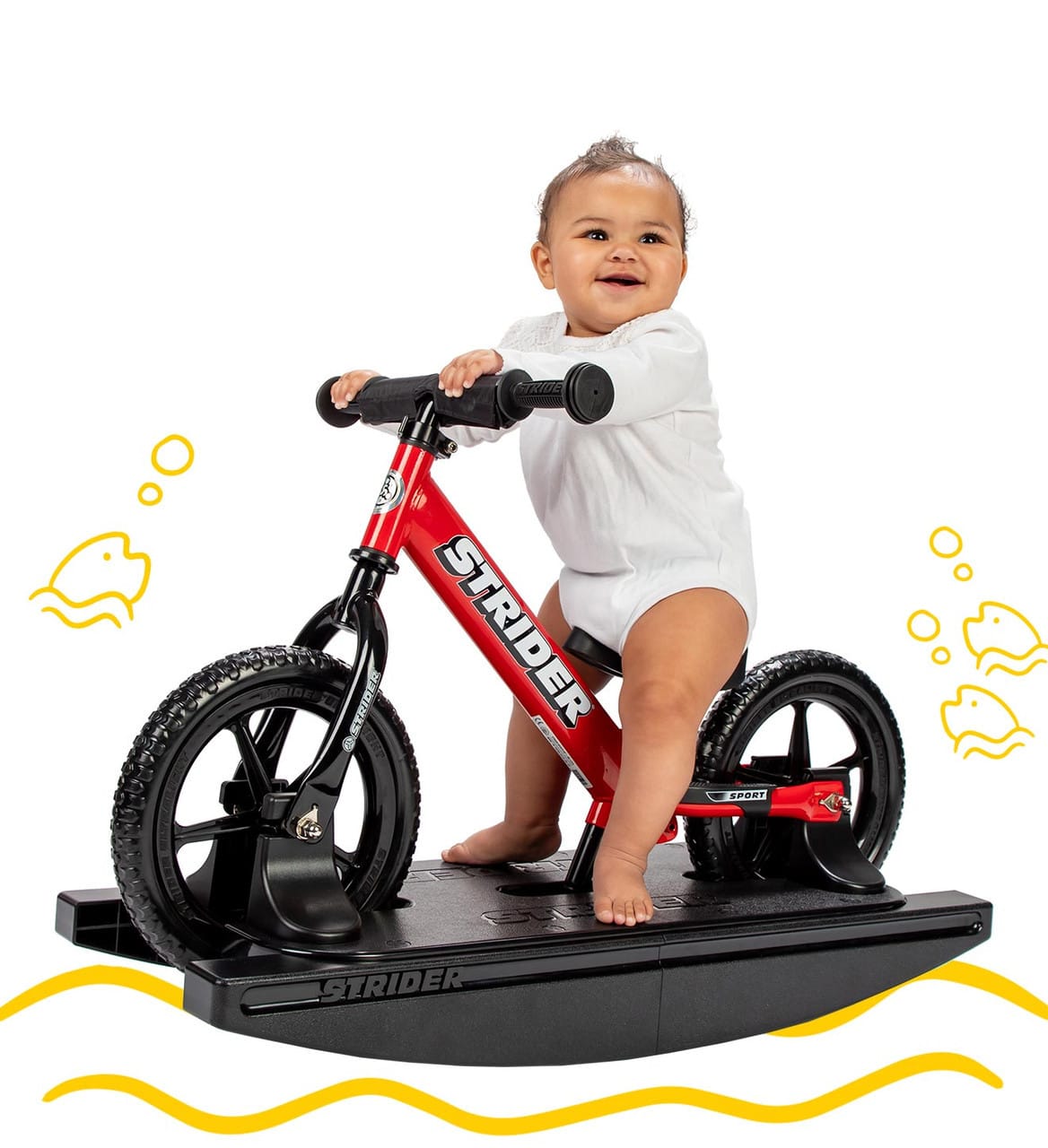
If your child is younger or you want to extend the use of the bike indoors, Strider also makes a version that comes with a Rocking Base.
Signs Your Child Is Ready
- Walks confidently and runs a bit
- Shows interest in riding toys
- Can follow simple instructions
The sweet spot is 2-3 years old, but readiness matters more than age.
Balance Bike Materials Compared
Steel: Durable and affordable but heavier. Can rust without care.
Aluminum: Lightest option, rust-proof, but pricier. Worth it for serious use and multiple kids.
Wood: Beautiful but heavy and less weather-resistant. Best kept indoors or for light use.
Foam vs. Air Tires:
Foam tires: Puncture-proof, zero maintenance, adequate for sidewalks and parks. This is what we used on our Strider for four years without issue.
Air tires: Superior comfort and traction on rough terrain. Require pumping and can get flats.
For most families, foam tires are the practical choice. Unless you're planning serious trail riding, the maintenance-free convenience wins.
First Ride Tips from Experience
Start Smart
Choose a gentle downhill: A slight slope helps kids discover gliding naturally. Our driveway was perfect.
Let them walk it first: Both my boys spent days just sitting on the bike, pushing it around like a walking toy. Don't rush this phase.
Pick the right surface: Grass is forgiving for falls but harder to push on. Smooth pavement builds confidence faster once they're ready.
Never push or pull them: Let kids progress at their own pace. My oldest needed to test the waters before his first glide, whereas my youngest hopped on and took off. Both became confident riders.
Typical Learning Timeline
- Step 1: Sitting, walking with bike between legs
- Step 2: Bigger steps, occasional short glides
- Step 3: Confident gliding, feet up for several seconds
- Step 4: Long glides, steering around obstacles
Every child is different. Some cruise in days; others take months. Both are completely normal.
Safety Gear
Helmet: Must fit snugly and sit level on the head. Start this habit early. My friend is an emergency room doctor and loves to share gory stories. When the topic of kids and bikes comes up, he always gets quiet and says, "I'd never let my child ride a bike without a helmet." It scared the crap out of me.
Closed-toe shoes: They'll drag their toes when stopping. Skip the sandals and flip flops until you get a feel for their riding style.
Long pants (optional): Prevent scrapes on cautious kids during the learning phase.
Best Practice Locations
- Empty parking lots (weekends)
- Basketball courts
- Paved bike paths with light traffic
- Parks with smooth walkways
- Quiet cul-de-sacs
Avoid busy sidewalks, steep hills (until confident), and areas with off-leash dogs.
Can You Convert a Regular Bike to a Balance Bike?
Yes, but I wouldn't recommend it for toddlers.
The process:
- Remove pedals with a pedal wrench (15mm)
- Lower the seat so feet touch flat
- Optional: Remove the chain to reduce weight
- Cover crank arms with foam to prevent scrapes
Why it usually doesn't work well: Most kids' bikes are too heavy for effective balance learning. The geometry isn't optimized for feet-down riding, and exposed crank arms hit little legs.
When it makes sense: Testing the concept with a 4-5 year old who's close to pedaling age anyway, or if budget is extremely tight.
For toddlers, a dedicated balance bike is worth the investment. The weight difference matters more than you'd think.
Common Questions About Balance Bikes
How long do kids use balance bikes? Typically 1-3 years, from ages 2-5. My boys each used ours for about 2-3 years before transitioning to pedal bikes around age 4-5.
Do they help with overall coordination? Absolutely. Balance bikes develop core strength, spatial awareness, and motor planning.
Should I get a hand brake? For toddlers, no. They naturally stop by putting feet down. For older kids (4-5 years), a brake can help prepare for pedal bikes, but it's not essential.
What size should I get? Measure inseam, not age. Choose a bike with a minimum seat height 1 inch lower than your child's inseam. When seated, both feet must be flat on the ground.
Are expensive balance bikes worth it? The $100-150 range (like Strider) offers excellent value. Premium bikes ($200+) are lighter and more refined – worth it if you'll use it for multiple kids or your child rides frequently (or you have an enthusiastic grandparent who wants to drop some cash). For casual use, mid-range bikes are perfect.
The Bottom Line
I think balance bikes are a smart investment. Watching both my boys discover the joy of gliding, then seamlessly transition to pedal bikes without training wheels or tears, made it worth every penny.
The Strider Sport Balance Bike remains my top recommendation for its durability, exceptional age range (18 months to 5 years), and overall value. Whether you're starting with a toddler or preschooler, it'll serve your family well (and likely still have resale value when you're done).
Start early, be patient, and enjoy watching your kiddo discover two-wheeled freedom.
Prices reflected as of March 2026. This article contains affiliate links, which means we may earn a small commission if you make a purchase through our links at no additional cost to you.
Leave a Comment