
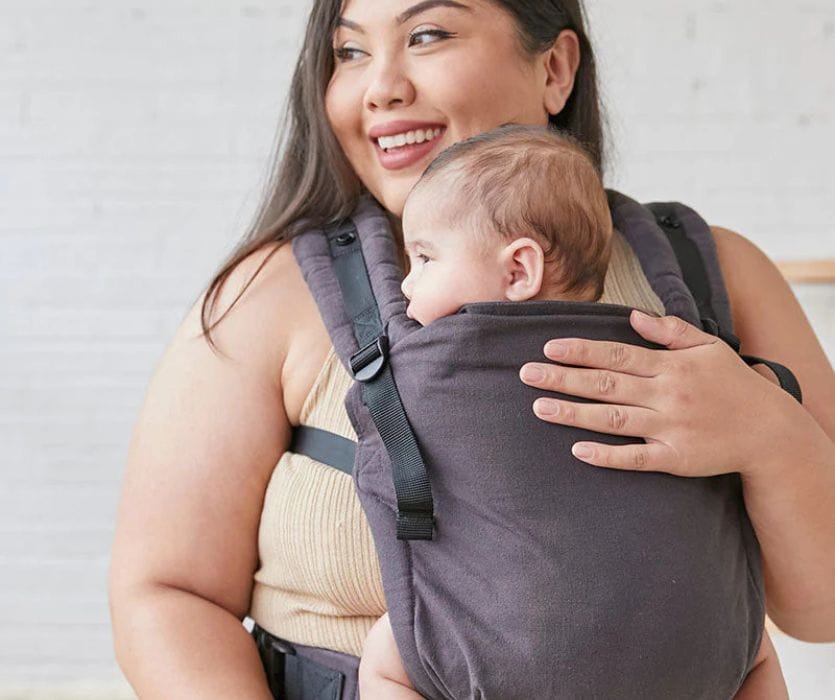
If you've ever worn a hiking backpack, you already understand the basic logic of a soft structured carrier. Weight on your shoulders, support at your waist, everything buckled securely in place. It's familiar, it feels secure, and it's probably the carrier type you picture when someone says "baby carrier." There's a reason they're the most popular option on the market.
That said, "soft structured carrier" covers a huge range of products, and not all of them are created equal. Here's what you actually need to know.
What you'll find here:
- What a soft structured carrier actually is
- How you can wear your baby in one
- Age and size range
- Honest pros and cons
- A note on forward facing
- How to know if this is the right type for you
- The brands that come up most often — and why
What Is a Soft Structured Carrier?
A soft structured carrier (SSC) – also called a buckle carrier – is a rectangular fabric panel with padded shoulder straps and a waistband that secure with buckles or clips rather than knots or ties. Think of it as the modern evolution of the meh dai: same basic concept, but with hardware instead of fabric straps.
You've almost certainly seen these before even if you didn't know the name. Ergobaby, Baby Tula, Lillebaby, Kinderpack, Hope & Plum, and Infantino all make soft structured carriers. They're sold in big box stores, baby boutiques, and online, and they're what most people end up reaching for when they want something that feels intuitive and secure.
How Can You Wear Your Baby in One?
Most SSCs support some combination of the following positions, though each brand has its own approved carry list and you should always follow the manufacturer's guidelines:
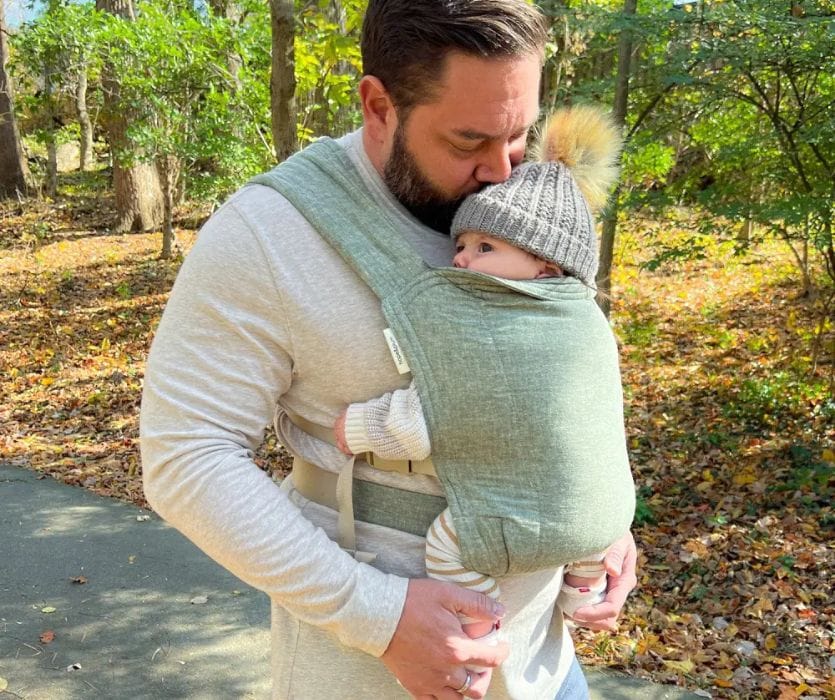
Front carry, facing in — Your baby faces your chest, their head near your collarbone, knees higher than their bottom in an ergonomic "M" position. This is the most common position and works from the newborn stage onward.
Front carry, facing out — Your baby faces away from you, seeing the world. This position has real limitations (more on that below) and is not supported by all carriers or recommended for extended periods.
Back carry — Your baby rides on your back, facing in. This is a game-changer for getting things done around the house and becomes most parents' favorite position once a baby has good head and neck control.
Hip carry — Some carriers support a hip carry position, though most parents find other carrier types more comfortable for this.
What Age and Size Can Use One?
Most soft structured carriers work from newborn through preschool age, though "newborn ready" varies by brand. Some require an infant insert or have a built-in newborn adjustment (like the Ergobaby Omni or Tula Free to Grow) that narrows the seat for smaller babies. Others, like the Ergobaby Embrace, are designed specifically for the newborn and early infant stage and have an upper weight limit around 25 pounds.
When shopping, check whether the carrier requires a separate infant insert, has a built-in newborn mode, or is only suitable once your baby reaches a certain weight or height.
The Honest Pros and Cons
What SSCs do really well:
Even weight distribution. Shoulders, waist, and chest all share the load, which is a genuine relief when your baby hits 20 pounds, and you still have two hours of the museum left.
Easy to share. Most SSCs adjust enough that a 5'1" mom and a 6'2" dad can both use the same carrier comfortably. Not all carrier types can say that.
Feels secure. No knots to second-guess, no tails trailing on the ground. Buckle it, adjust it, done.
Widely available. You can find them in most baby stores, which matters if you want to try before you buy or need a replacement in a hurry.
Where they fall short:
Fit can be tricky for petite wearers. The padding and structure that make SSCs comfortable can also make them bulky. Buckles land in awkward spots, waistbands don't always tighten down far enough, and the whole thing can feel like it's wearing you. It's one of the most common complaints from smaller-framed parents.
Less comfortable for sitting. If you want to work at a desk or sit through a ball game while wearing your baby, a carrier with an apron-style waistband or a ring sling will serve you better.
They don't pack down small. A ring sling rolls up to the size of a grapefruit. A buckle carrier does not. This matters more than you'd think once you're actually living out of a diaper bag.
More adjustment points than expected. Waistband, shoulder straps, chest clip, seat width, back panel height – getting the fit right takes some learning, and what works perfectly at four months will likely need readjusting by eight.
A Note on Forward Facing
Forward facing is one of the most searched features in baby carriers, so it's worth a quick reality check before it becomes your deciding factor.
Baby needs to have solid head and neck control and be able to sit supported before forward facing is appropriate (generally around 4–6 months). Before that, it's not safe regardless of carrier.
Even after that milestone, most babywearing educators recommend keeping forward-facing sessions short (around 15–20 minutes) because babies can get overstimulated quickly with no way to retreat, and the position puts extra strain on your back by shifting your center of gravity forward.
Not every SSC offers it, so if it matters to you, check before buying. The Ergobaby Omni Classic, Tula Explore, and Beco Gemini all support it. That said, most parents who eventually try back carrying wish they'd started sooner. It's more comfortable for both of you and gives your baby just as much to look at.
Is a Soft Structured Carrier Right for You?
Go for it if:
- You want one carrier that grows from newborn to toddler
- You want weight spread evenly across your body
- You'd rather buckle than tie
- You need something easy to hand off to a partner or caregiver
Maybe look elsewhere if:
- You're petite and worried about fit
- You mainly want something quick and packable
- You'll be sitting a lot while wearing
The Brands Worth Knowing About
Tula Free to Grow Fits 7–45 lbs without an insert, easy to find new or secondhand, and works for a wide range of body types. One of the most recommended starter carriers for good reason. Note: H-back straps only, no X-back option. Find the Tula Free to Grow here.
Kinderpack (Infant) The go-to recommendation for bigger babies and long carries. Heavy babies feel surprisingly light in it, and parents tend to use it well into toddlerhood. The cool knit mesh version is worth seeking out in warmer climates. Harder to find secondhand than a Tula, but worth the search. Find them on the Kinderpack site.
Hope & Plum Lark Lightweight, breathable hemp-cotton blend with an apron waist and X-back straps — comfortable for both front and back carries and packable enough to toss in a bag. The catch: it doesn't fit newborns (most babies need to be in 3–6 month clothing first). Pricier new, but holds its resale value well. Find them on Hope & Plum.
Ergobaby Omni Classic and Omni Deluxe Ergobaby's current structured carrier lineup and the most accessible entry point for parents who want a name-brand carrier with forward-facing capability. Both adjust to fit newborns without a separate insert and support multiple carry positions including forward facing. The Omni Deluxe is the newer, more feature-rich version. Both are available in most baby stores and are solid, reliable choices if you can't try before you buy – though they run bulkier and warmer than some alternatives. Find them on Ergobaby.
Ergobaby Embrace Worth distinguishing from the Omni line – this one is designed specifically for the newborn stage. Soft, simple, easy to put on. Just know that despite a 25 lb stated limit, most parents find it uncomfortable well before that, around 15–18 lbs. Think of it as a newborn carrier, not a grow-with-you carrier. Find the Ergobaby Embrace here.
LennyLamb LennyLight A woven-wrap fabric SSC that fits newborn through toddler, comes in H or X back, and is exceptionally soft and supportive. A step up in quality and price from mass-market options. You can find them here.
Before You Buy: One More Thing
One thing worth knowing before you commit: the SSC market is enormous, and the most heavily marketed carriers aren't always the best fit for your body. Ergobaby and Baby Bjorn have massive retail presences and big advertising budgets — which is why you see them everywhere — but parents in babywearing communities often end up with less mainstream options like Kinderpack or Hope & Plum Lark after trying a few things. That's not to say the big brands are bad. It's just worth knowing that what's most visible isn't necessarily what's most suited to you.
If you can only do one thing before buying, make it a fit check. Even if you've already purchased a carrier and it feels off, post a photo to a babywearing group before writing it off. The difference between a correctly and incorrectly fitted SSC is significant, both in comfort and in how much you actually reach for it.
The Full Series
- Overwhelmed by Baby Carriers? Here's Where to Actually Start
- Stretchy Wraps Are Magic for Newborns — Until They're Not
- Ring Slings: What They Are, How They Work, and Why Parents Love Them
- Beyond the Buckle: A Guide to Woven Wraps and Meh Dais
- What Is an Onbuhimo? Everything You Need to Know About This Underrated Carrier
- Just Tell Me Which Carrier to Buy: A Practical Guide for Overwhelmed Parents
This post may contain affiliate links. If you purchase through my links I may earn a small commission at no extra cost to you. Thanks for supporting Pregnant Chicken — it keeps the lights on and supports our free content. Updated February 2026.

Leave a Comment