
If giving your newborn their first bath has you stressed, you're not alone and there's a gentler option worth knowing about.
Swaddle baths have been around for a while, but they're gaining traction for good reason: research shows they significantly reduce both temperature loss and crying in newborns. They're especially common in NICUs for premature babies, and most pediatricians are happy to recommend the technique for healthy full-term babies at home too.
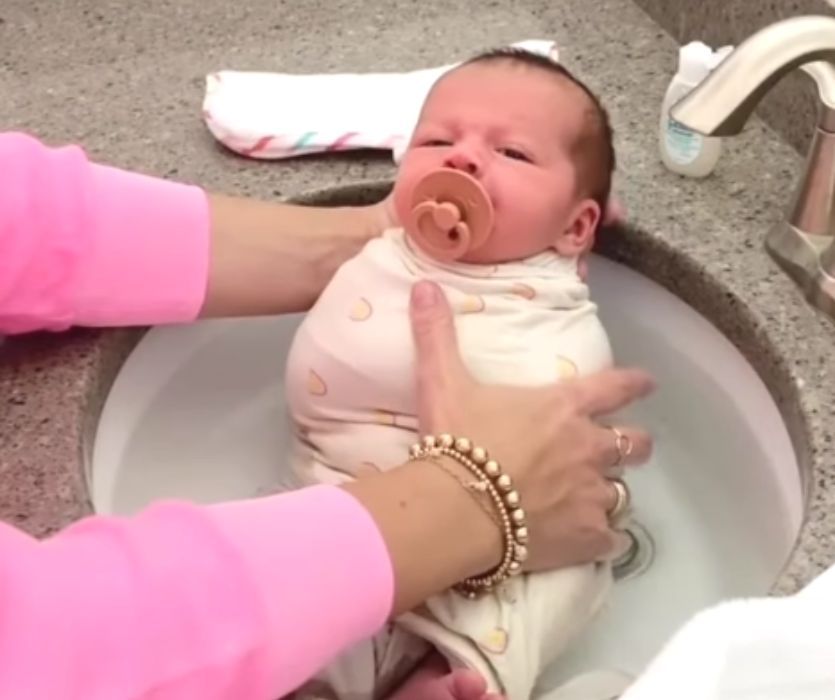
Here's the core idea: instead of stripping your baby down and sponge-bathing them exposed to the air, you keep them loosely wrapped and lower them into warm water up to their shoulders. Then you unwrap one limb at a time, wash it, and rewrap before moving on. Baby stays warm, stays calm, and (let's be real) you stay calm too.
Why it works
Newborns are used to being snug. The swaddle bath mimics that feeling of containment from the womb, which is why babies tend to stay so much calmer than during a traditional exposed bath. Less crying, more warmth, easier experience for everyone.
Is a swaddle bath right for your baby?
For most healthy newborns, yes. But there are a few situations where you'll want to check with your pediatrician first:
- The umbilical stump looks red, smells off, or seems infected
- Baby has open skin irritation or a rash
- Your pediatrician has flagged any specific concerns
For a healing belly button with none of those warning signs, occasional water immersion is fine — just make sure to pat the area completely dry with a clean cloth afterward.
What you'll need
Get everything ready before your baby is undressed (you never want to leave them to grab something mid-bath).
- Infant tub or clean sink
- Thin muslin swaddle cloth or light blanket
- Soft washcloth
- Gentle baby wash
- Hooded towel
- Clean diaper and clothes, already laid out and ready
How to Give a Swaddle Bath: Step by Step
1. Get the water temperature right. Aim for around 98–100°F (37–38°C) — close to body temperature. A bath thermometer takes the guesswork out of it, but if you don't have one, test with your wrist or elbow rather than your hand. Those spots are more sensitive to heat and will give you a better read.
2. Remove baby's clothes and diaper.
3. Wrap baby loosely in your swaddle cloth. This is more of a snug wrap than a tight swaddle — arms in but not pinned, just enough to help baby feel contained and secure. Think cozy burrito, not straight jacket.
4. Lower baby into the water in a reclined position, with the water level at their shoulders.
5. Never leave baby unattended. Not even for one second. Get everything within arm's reach before you start, and let anything else wait.
6. Unwrap one limb at a time. Wash, rinse, rewrap — then move to the next. Keep the rest of baby covered and in the water while you work.
7. Lift baby out and pat thoroughly dry — especially all the little folds and the belly button area — and get them dressed quickly to hold in warmth.
What if baby still cries?
Some babies just don't love baths, swaddle method or not, and that's completely normal. A few things worth trying:
- Check the water temperature — even slightly too cool can set a newborn off
- Try a different time of day — avoid bath time when baby is hungry, overtired, or already worked up (I mean, I'm the same)
- Talk or sing throughout — your voice is genuinely calming to them, even when nothing else is working
- Give it a few tries — some babies warm up to it once it becomes familiar
If bath time is consistently distressing regardless of what you try, mention it to your pediatrician. It's rarely a sign of anything serious, but they may have suggestions specific to your baby.
How often, and for how long?
Newborns only need a bath two to three times a week — their skin is sensitive and bathing more frequently can dry it out. That said, swaddle baths are a great card to pull out on an especially fussy day, or when you're dealing with a mustard-yellow blowout that somehow made it into an ear fold. (It happens to all of us.)
As for how long you can keep doing them — swaddle baths are best suited for roughly the first two to three months. As babies develop more motor control and start wanting to move and splash around, a traditional bath usually becomes a better fit. You'll know when your baby is ready for the transition.
Related: How to Give a Newborn a Bath
Leave a Comment